The Shift From Writing Code to Designing Systems in an AI-Driven World
Software engineering in an AI-driven world should be about designing the system, not just writing code. That's why I'm excited to see how AI tools are evolving and how they're helping us think about the system.
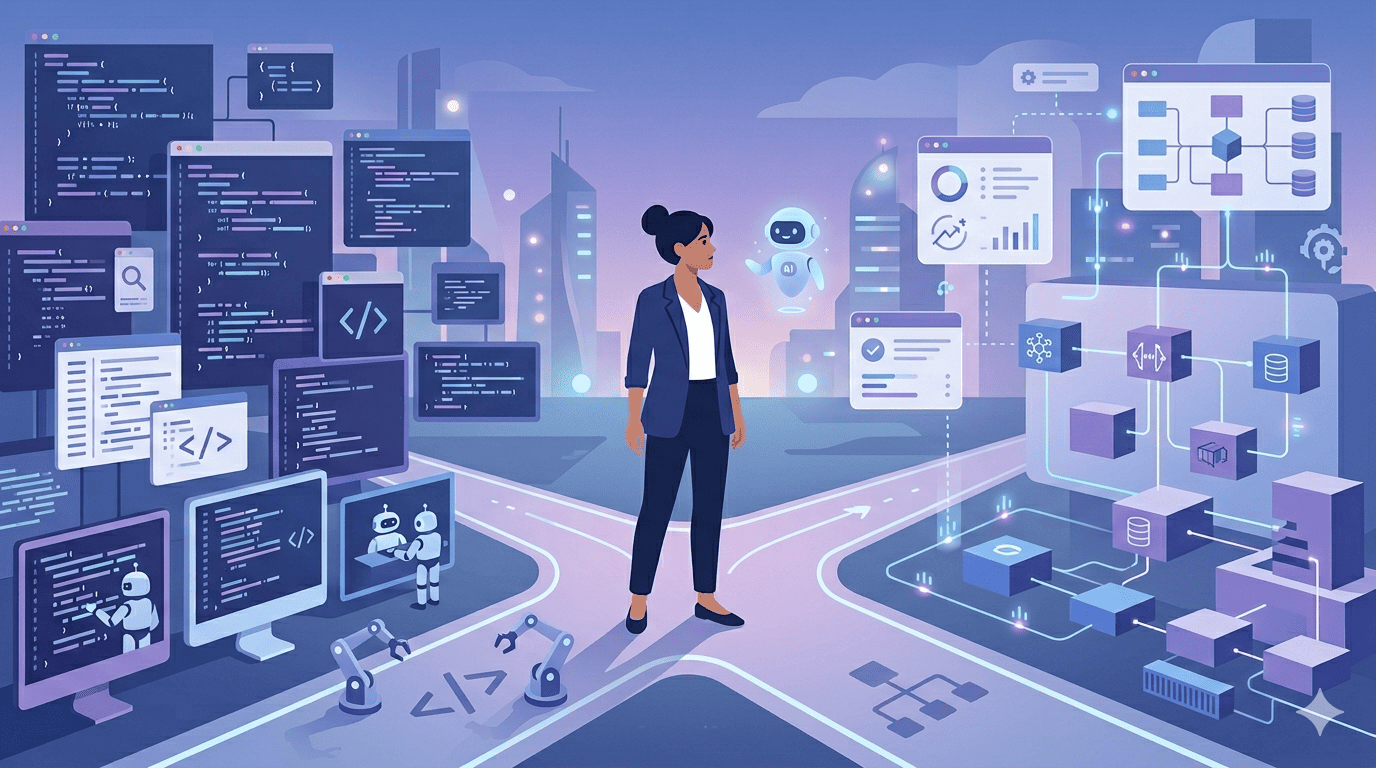
I used to spend hours implementing features in my projects. As a software engineer, most of my time was focused on writing code — building endpoints, handling validation, and making everything work.
But lately, something has changed. I still write code, but it’s no longer the main effort. More and more, I find myself thinking about how the system should be designed — how components interact, how data flows, and what the overall structure should look like.
I still remember the first time I tried an AI tool called GitHub Copilot. At that time, I was working on my final-year project using Laravel. I signed up for the preview and got one year of free access. I was genuinely impressed. The code completion felt fast and surprisingly accurate — it was like having a teammate who could instantly continue what I started.
It hasn’t been that long since that experience, but things have evolved quickly. Today, AI tools don’t just help with code completion — they can generate entire features, sometimes even a full project. The pace of improvement is honestly amazing.
At first, I thought it was just about productivity — writing code faster and finishing tasks quicker. But over time, I realized the bigger shift was not in how fast I could code, but in how I think about building the software. When AI can handle much of the implementation, the real challenge becomes deciding what should be built, how the system is structured, and how everything fits together. That’s when I started to feel less like someone who just writes code and more like someone who designs the system.
What Does Thinking Like an Architect Actually Mean?
Thinking like an architect is not about drawing complex diagrams or choosing fancy technologies. It is about making decisions before the code exists — deciding what should be built, how the system is structured, and how different parts should interact.
The focus shifts from writing code to making decisions. Instead of concentrating only on implementation details, the attention moves to the bigger picture — how data flows through the system, where responsibilities belong, and what trade-offs are made at each step. In this approach, code becomes the result of clear thinking, not the starting point.
What Actually Changes In Practice?
This shift is not just theoretical — it changes how everyday work is approached. Instead of starting with writing functions or setting up files, the process begins with defining the problem more clearly: what needs to be built, what the inputs and outputs are, and how different parts of the system should communicate. AI can then assist with the implementation, but the direction, structure, and constraints still come from the engineer. The quality of the result depends less on how fast code is written, and more on how clearly the system is designed.
Why This Shift Is Important?
This shift matters because the nature of software engineering work is changing. In the past, a large portion of the effort was spent on implementation, such as writing code, debugging, and making things work. That effort created value because not everyone could do it efficiently.
Today, implementation is becoming easier and faster with the help of AI. As a result, the value of simply being able to write code is gradually decreasing. What becomes more valuable is the ability to think clearly about problems, design systems effectively, and make the right decisions before any code is written.
In this environment, engineers who focus only on implementation may find themselves limited, while those who can define problems, structure solutions, and guide the overall system will have a stronger advantage.
The Role of AI in This Shift
AI plays a significant role in accelerating this transition. It acts as a powerful assistant that can handle much of the repetitive and time-consuming aspects of coding, from generating boilerplate code to implementing entire features.
However, AI does not replace the need for thinking. It depends heavily on the instructions it receives. If the problem is not clearly defined, or if the system design is unclear, the output will also be inconsistent or incorrect.
In this context, the role of the engineer shifts from being the primary executor to becoming a decision-maker and guide. Instead of focusing on how to write every line of code, the focus moves to defining what should be built, setting clear boundaries, and ensuring that the generated code aligns with the intended design.
AI becomes a tool for execution, while the engineer remains responsible for direction.
What If You Don’t Adapt?
Relying on AI without changing the way of thinking can create new risks. It is easy to become dependent on generated code without fully understanding how or why it works. Over time, this can weaken the ability to analyze problems, debug issues, or make sound technical decisions.
There is also a risk of becoming limited to surface-level work, accepting whatever the AI produces without questioning the design or the trade-offs behind it. This can lead to systems that work in the short term but are difficult to maintain, scale, or evolve.
Without adapting, the role of the engineer may gradually shift from building systems to simply operating tools. The difference may not be obvious at first, but it becomes significant over time.
Beyond Techincal Skills
This transition is not only about improving technical thinking. It also involves developing non-technical skills that support better decision-making.
Communication becomes especially important. Designing systems often requires explaining ideas clearly, aligning with others, and making sure everyone understands the direction. A well-designed system can still fail if it is not communicated properly.
Other skills, such as writing, collaboration, and the ability to simplify complex ideas, also become more valuable. As the role shifts toward defining problems and guiding solutions, the ability to express thoughts clearly becomes just as important as the ability to implement them.
Conclusion
The shift from writing code to designing systems does not mean that coding is no longer important. Code is still the foundation of software. However, the leverage has changed.
As AI continues to improve, the ability to think clearly, design systems, and make good decisions becomes more valuable than the ability to manually implement every detail. Engineers who embrace this shift can use AI as a force multiplier, while still maintaining control over the system as a whole.
In the end, the goal is not to stop coding, but to move beyond it, focusing on the level where decisions shape the outcome and where the real impact is made. And as this shift happens, the ability to think clearly and communicate effectively becomes just as important as writing the code itself.
That’s a small share from me. I hope this post has inspired you to think about the role of AI in your work and how it can help you make better decisions.